· Education · RED Lending
Buying a Fix & Flip at Auction: What Changes and What to Check First
Auctions can turn up flip properties that never reach the open market. Here is what changes when you buy at auction and what to check before you bid.
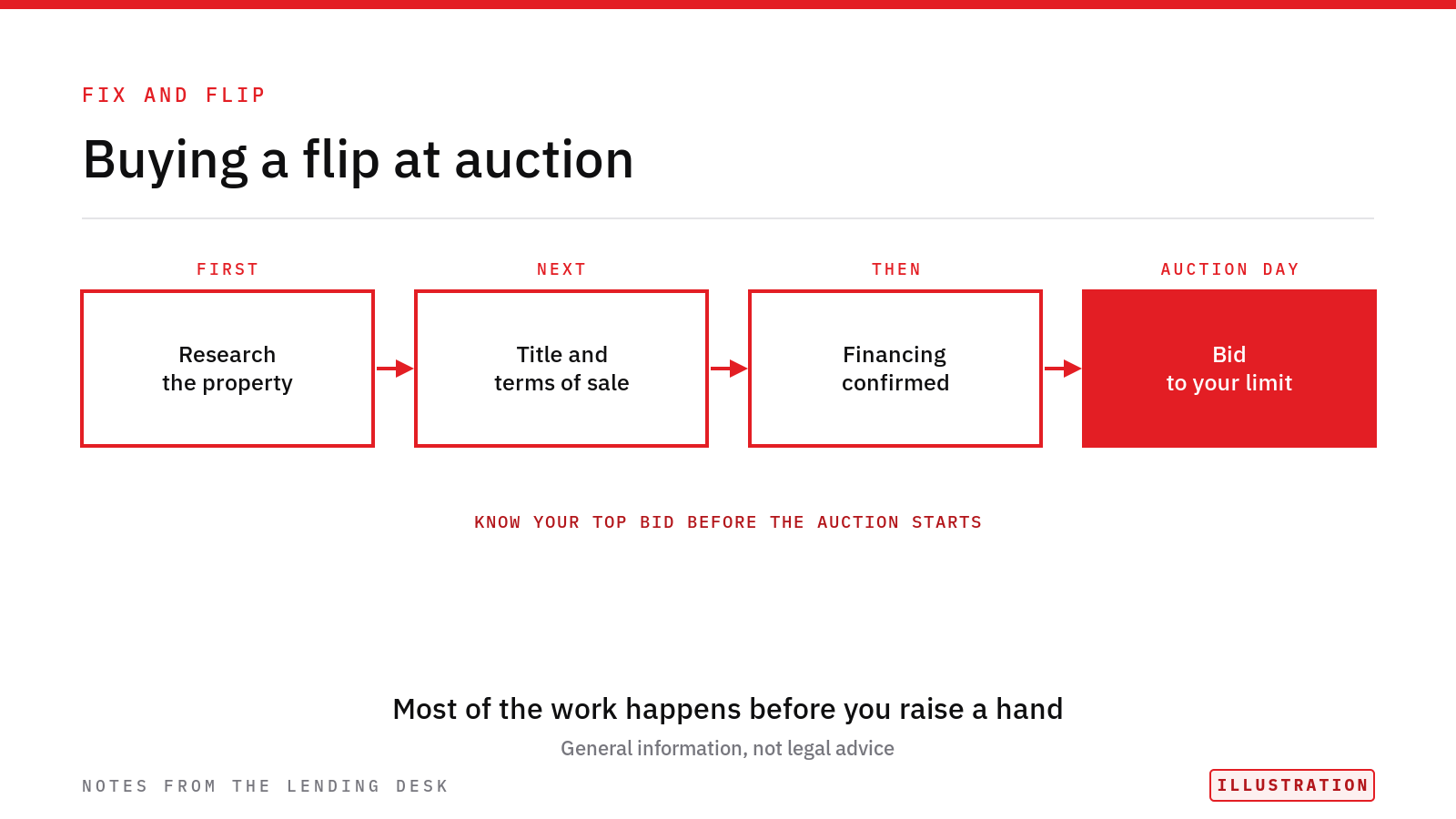
Auctions can turn up houses that never reach the open market. Foreclosure sales, online auctions and bank-owned property sales all give investors a shot at a property that needs work. They also move fast, sell as is and leave little room to fix a mistake after the hammer falls. Most of the work happens before you bid.
Read the terms of sale
Every auction has its own rules. Read them before you register. They tell you how much you have to deposit to bid, when the balance is due, whether there is a buyer's premium and what happens if you cannot close. Many auctions sell the property as is, with no inspection period and no way to back out. If a term is unclear, ask the auction company or an attorney before the sale, not after.
Expect limited access
At a regular sale you walk the house with an inspector. At many auctions you cannot go inside at all. That changes how you build the budget. Drive the street, look at the exterior, check public records and pull the permit history. Then plan for what you cannot see. A larger contingency in the rehab budget is how you account for the rooms you never walked.
Check the title before you bid
Depending on the type of sale, some liens, back taxes or other claims may stay with the property. A title search before the auction shows what is recorded against it. A title company or real estate attorney can tell you what survives the sale where the property is located. Lenders need clear title at closing, so a problem you find early is far easier to deal with.
Find out who is living there
Some auction properties are still occupied by a former owner or a tenant. Removing an occupant is a legal process that takes time and has its own rules in each state. Talk with a local attorney if the property may be occupied, and build that time into your plan. Holding costs run the whole time you wait.
Line up your financing first
Talk with your lender before auction day, not after you win. Ask whether the purchase can be financed and how quickly the lender can close. Auctions often require proof of funds to register and leave a short window to pay the balance. Send the desk the property details, your budget and your exit plan so you know where you stand before you raise a hand.
Set your top bid at home
Auctions reward preparation and punish emotion. Work out your top bid before the sale starts. Start from a realistic after-repair value based on recent comparable sales. Subtract the renovation budget with its contingency, your holding costs, the cost of selling and the profit you need. What is left is your limit.
When the bidding passes your limit, stop. Another property will come along. Overpaying for a house you could not inspect is one of the harder mistakes to recover from on a flip.
Questions to answer before auction day
- What deposit is required to bid, and when is the balance due?
- Is the property sold as is, and can you inspect it at all?
- What does the title search show, and what survives the sale?
- Is anyone living in the property?
- Has your lender reviewed the deal, and can the purchase close in time?
- What is your top bid, and how did you get there?
Program figures are indicative only and subject to complete documentation, underwriting, appraisal and final credit approval. This post is general information, not financial or legal advice.