· Education · RED Lending
Buying a Rental With Tenants in Place: What to Review Before Closing
A rental with tenants in place comes with someone else's leases and records. Here is what to review before closing, from the rent roll to deposits and estoppel letters.
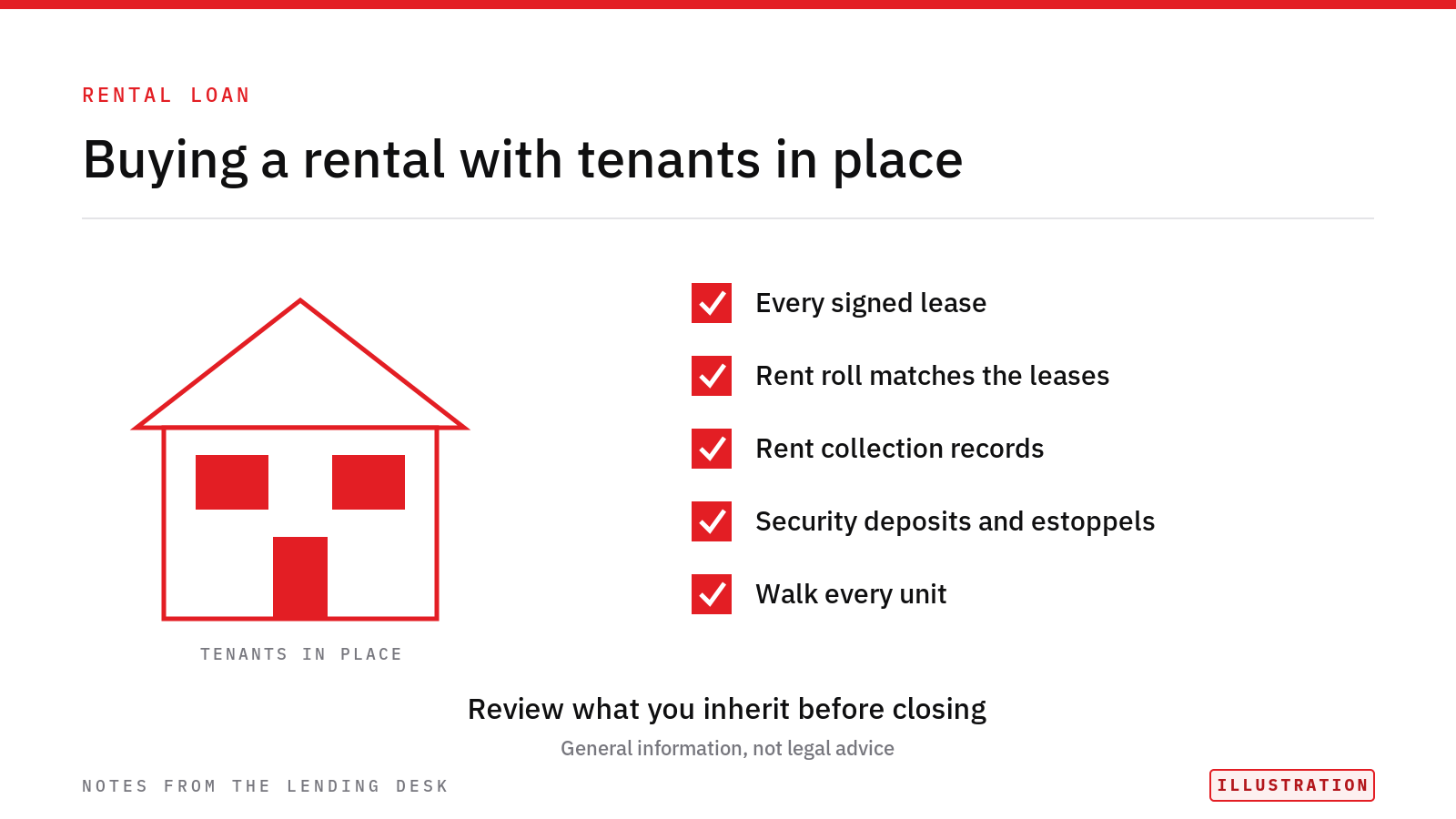
Buying a property that is already rented can mean income from the first month. It also means you inherit someone else's leases, tenants and records. Here is what to review before closing so there are no surprises after.
Get copies of every lease
Ask the seller for each signed lease, including any renewals and amendments. Check the names, the rent, the start and end dates and who pays which utilities. Look for anything unusual, such as a promised rent freeze, an option to buy or a side agreement for repairs.
In many places a lease stays in force when the property sells. What the seller agreed to is part of what you are buying.
Compare the rent roll with the leases
A rent roll is the seller's summary of each unit, the tenant, the rent and the lease dates. It should match the signed leases. If it does not, ask why before you rely on it.
Confirm rent is actually being paid
A lease shows what a tenant agreed to pay. Bank statements or deposit records show what was paid. Ask for recent rent collection records. Late or partial payments are worth knowing about before you take over.
Ask about security deposits
Find out how much each tenant paid as a deposit and where it is held. In many places deposits transfer to the new owner at closing. Your attorney or title company can explain how it works where the property is located.
Tenant estoppel letters
An estoppel letter is a short statement signed by the tenant. It confirms the rent, the deposit, the lease dates and that there are no disputes. It lets you hear the terms from the tenant, not only from the seller. Ask your agent or attorney whether to make estoppels part of the contract.
Walk every unit
Occupied units are easy to skip. Do not skip them. Arrange access with proper notice and look at the condition of each unit, the appliances and the systems. Deferred repairs in an occupied unit become your cost after closing.
How in-place leases fit a rental loan
On a rental loan, the property's rent is central to the review. Executed leases for occupied units are a standard part of the file, and the appraisal looks at market rent for the area. When the leases, the rent roll and the collection records all agree, the file is easier to read.
Plan the handoff
Before closing, plan how tenants will learn about the new owner, where to send rent and who to call for repairs. A smooth handoff starts the relationship on the right foot. Send the leases, rent roll and collection records with your scenario.
Program figures are indicative only and subject to complete documentation, underwriting, appraisal and final credit approval. This post is general information, not financial or legal advice.