· Education · RED Lending
Closing Costs on an Investment Property Loan: What to Budget at the Closing Table
The down payment is not the only cash you bring to closing. Here is what usually shows up on the closing statement for an investment property loan and how to plan your cash to close.
Many investors budget carefully for the down payment and the rehab, then get surprised by the closing statement. Closing costs vary by state, county, property and loan, but the categories are predictable. Knowing them ahead of time keeps your cash to close from coming up short.
Lender costs
- Origination, often quoted in points, meaning a percentage of the loan amount
- Underwriting, processing or document fees
- The appraisal and any other third-party reports the file needs
Your quote shows the lender's costs for your scenario. Ask for them in writing and compare the total cost of the loan, not only the rate.
Title and settlement
- The lender's title insurance policy and, if you want one, an owner's policy
- The settlement or escrow fee for the company running the closing
- Lien and judgment searches, and any survey the title company requires
Title items that need clearing, such as an old lien, can add cost and time. We covered title review on Nov 7.
Government charges
Recording fees and, in many states and counties, transfer or mortgage taxes. In some places these are a meaningful amount, so ask your title company for an estimate early. Who pays the transfer tax, buyer or seller, depends on local custom and your contract.
Prepaid items and prorations
- Interest from the closing date to the first payment period
- The first year of the insurance premium, if not paid already
- Property taxes split between buyer and seller as of the closing date
- On a rental loan with an escrow account, an opening deposit for taxes and insurance
Prorations can go either way. Depending on what the seller has already paid, they show up as a cost or a credit.
Entity and legal costs
Every RED loan closes to an LLC or corporation. Budget for forming the entity, a registered agent and any certificate of good standing the file needs. Some investors also pay their own attorney to review the documents.
How cash to close adds up
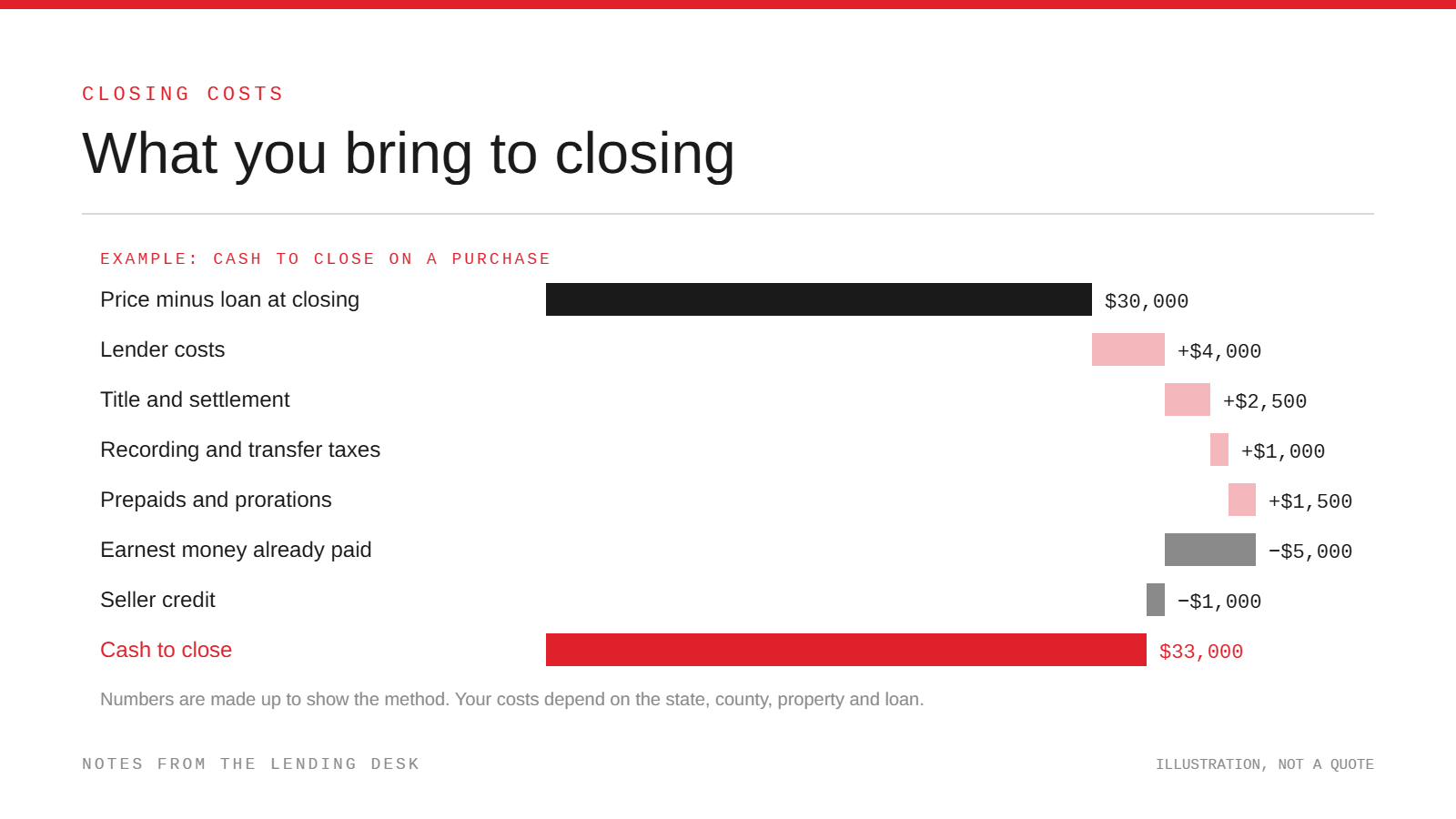
Start with the purchase price minus the loan amount at closing. Add closing costs. Subtract your earnest money deposit and any credits from the seller. That is the amount you wire.
Here is a made-up example to show the method. The price minus the loan at closing is $30,000. Closing costs come to $9,000. You already paid $5,000 in earnest money, and the seller gives a $1,000 credit. Cash to close is $33,000.
On a Fix & Flip, renovation money is released in draws after completed work is inspected. Plan for cash to start the work and carry the project until the first draw, on top of your cash to close.
Plan for it early
- Ask the desk for an estimate of lender costs with your quote
- Ask the title company for a fee estimate when you open title
- Review the settlement statement a few days before closing and ask about anything you don't recognize
- Confirm wiring instructions by phone, using a number you already know, before you send money. Wire fraud aimed at real estate closings is common.
Program figures are indicative only and subject to complete documentation, underwriting, appraisal and final credit approval. This post is general information, not financial or legal advice.