· Education · Sayasone Phongvichith
Pulling comps that hold up at appraisal
Your ARV is only as strong as the comparable sales behind it. Here is how to pick comps an appraiser is likely to accept.
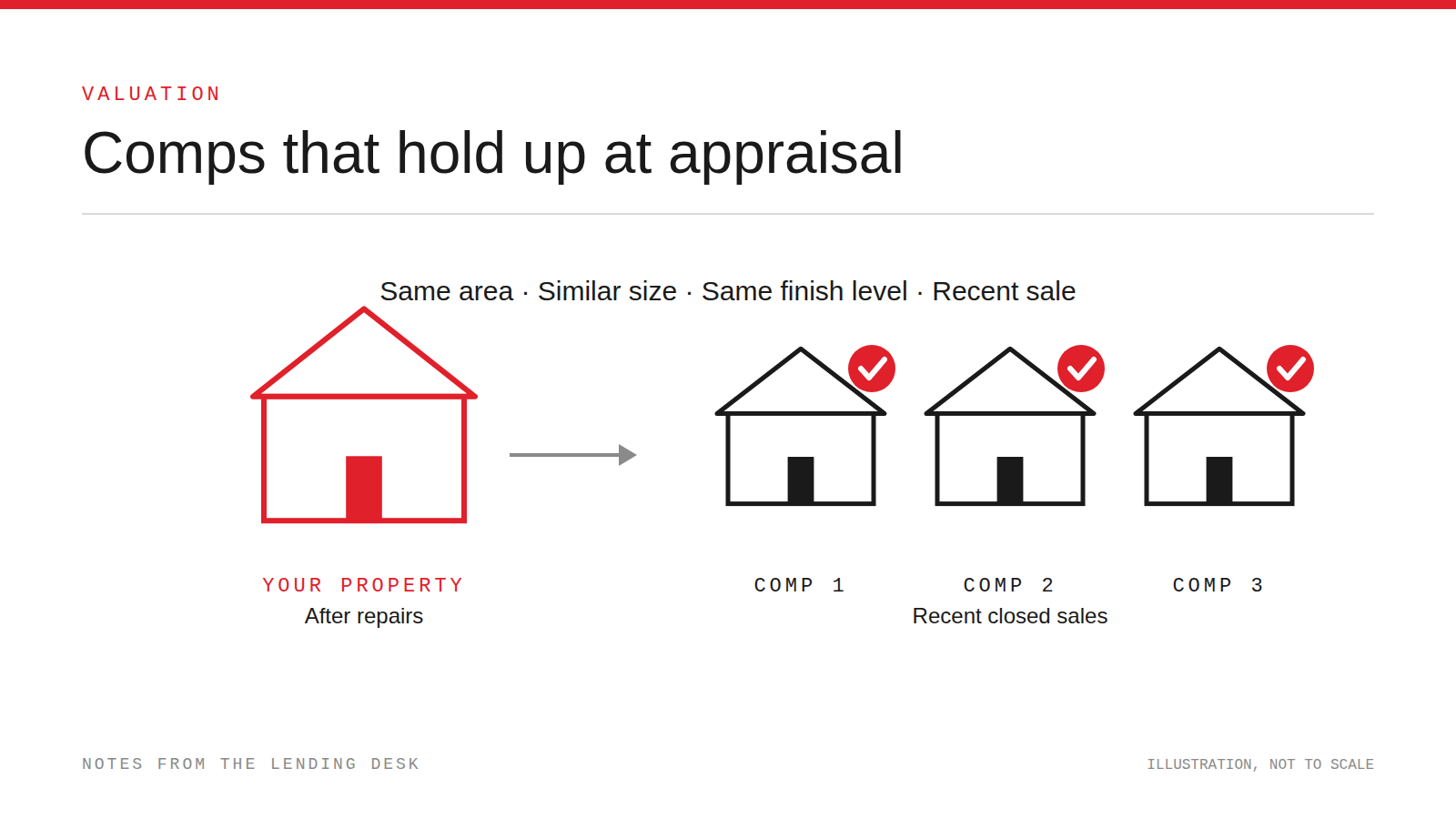
Every number that depends on after-repair value rests on one thing: the sales you choose to compare against. Pick them well and your ARV will usually survive the appraisal. Pick them badly and the whole deal can shift.
This is general guidance, and the appraiser's own judgment decides the final value.
Start close
The best comps are near the subject property, ideally in the same neighborhood. A sale across a major road or in a different school zone may not be comparable even when it is only blocks away.
Match the home
Look for similar size, bedroom and bathroom count, lot, age and style. When a comp differs, note how, and what that difference is worth.
Match the finish level
This is where most flips go wrong. If your plan is a full renovation, your comps should be renovated homes, not original-condition ones. And if your budget is lighter than the finish on the comps, be honest about the gap.
Use recent sales
Recent closed sales carry the most weight. Active listings and pending sales show what sellers hope for, not what buyers have paid. Keep them out of your ARV, or label them clearly as context.
Be honest about the range
Set your comps side by side and look at the spread. If one sale is far above the rest, do not build your ARV on it. A conservative number you can defend beats an aggressive one you cannot.
Write down your reasoning
For each comp, add a line on why it fits. When the desk and the appraiser can follow your logic, there are fewer surprises later.
Send them with your scenario
Include your comps, your ARV and the scope of work behind it. The as-is value and the ARV are confirmed through the appraisal during underwriting, so the stronger your starting point, the smoother that step tends to be.
Program figures are indicative only and subject to complete documentation, underwriting, appraisal and final credit approval. This post is general information, not financial or legal advice.