· Education · RED Lending
Flipping a Fire-Damaged House: What to Know Before You Buy
Fire-damaged houses often sell for less because most buyers walk away. Here is what to look at before you buy one to flip, from the structure to smoke and water damage.
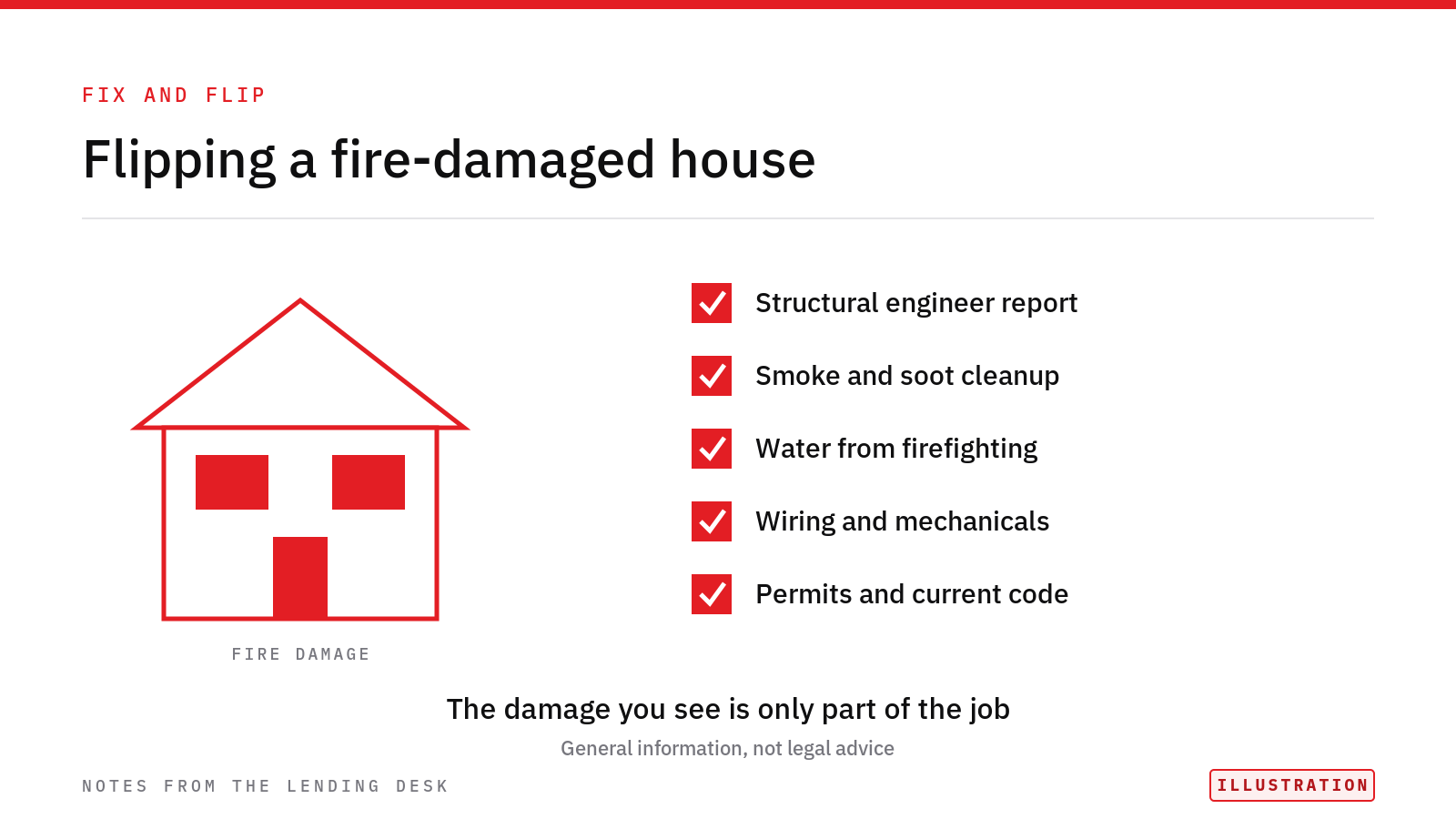
A house with fire damage often sells for less because most buyers walk away. For an investor with the right team, that can open a door. The catch is that the damage you can see is usually only part of the job. Smoke, water and heat travel farther than the burned area, and the repairs have to meet current code.
Start with the structure
Heat can weaken framing, joists and roof trusses even where the wood does not look burned. A structural engineer can tell you what can stay, what has to be replaced and what the repair plan should be. Lenders reviewing a fire-damaged property often ask for an engineer's report, so order one early. It protects your budget and it answers the first question the desk is likely to ask.
Look past the burned rooms
- Smoke and soot move through ductwork, insulation and wall cavities and leave odor that paint alone will not cover
- Water used to put out the fire can soak floors, drywall and subfloors and lead to mold
- Wiring near the fire can be damaged inside the walls, and older systems may need to be replaced
- Plumbing, the furnace and the water heater may have heat or water damage
- Windows, roofing and siding may be cracked, melted or open to the weather
Plan for permits and code
Fire repairs usually need permits, and the work often has to meet the building code in effect today, not the code from when the house was built. That can add electrical, framing or egress work you did not expect. Call the local building department early. Ask what permits the repair will need and whether any inspections or orders are already open on the property.
Ask about the insurance claim
Find out whether the seller filed an insurance claim and whether it has been settled. Ask what work, if any, was already done under the claim and by whom. Keep any reports from the insurer or the fire department. They help you and your contractors understand what happened and what was already addressed.
Insure the property during the work
A property with open fire damage can be harder to insure. Talk with an insurance agent before you close so you know what coverage is available during the renovation. Lenders require coverage that protects the property, so this is not a step to leave until the last week.
Build the scope of work in order
A fire job has more steps than a typical cosmetic flip. Cleanout and demolition come first, then smoke and odor remediation, then structural repairs, then new systems, then finishes. Write each step as its own line item with a real bid from a contractor who has done fire restoration before. Put a contingency on top. Hidden damage is common once the walls are open.
Think about the sale
Buyers will want to know the house is safe and the smell is gone. Keep the engineer's report, permits, final inspections and remediation invoices together. Ask your agent or attorney what the seller disclosure rules require where the property is located. A clean paper trail makes the finished house easier to sell and easier for a buyer's lender to approve.
Program figures are indicative only and subject to complete documentation, underwriting, appraisal and final credit approval. This post is general information, not financial or legal advice.