· Education · RED Lending
Holding Costs on a Fix & Flip: What It Costs to Own the House While You Work
Purchase price and renovation get the attention. Here is what counts as a holding cost on a flip, why time drives it and how to build it into your budget.
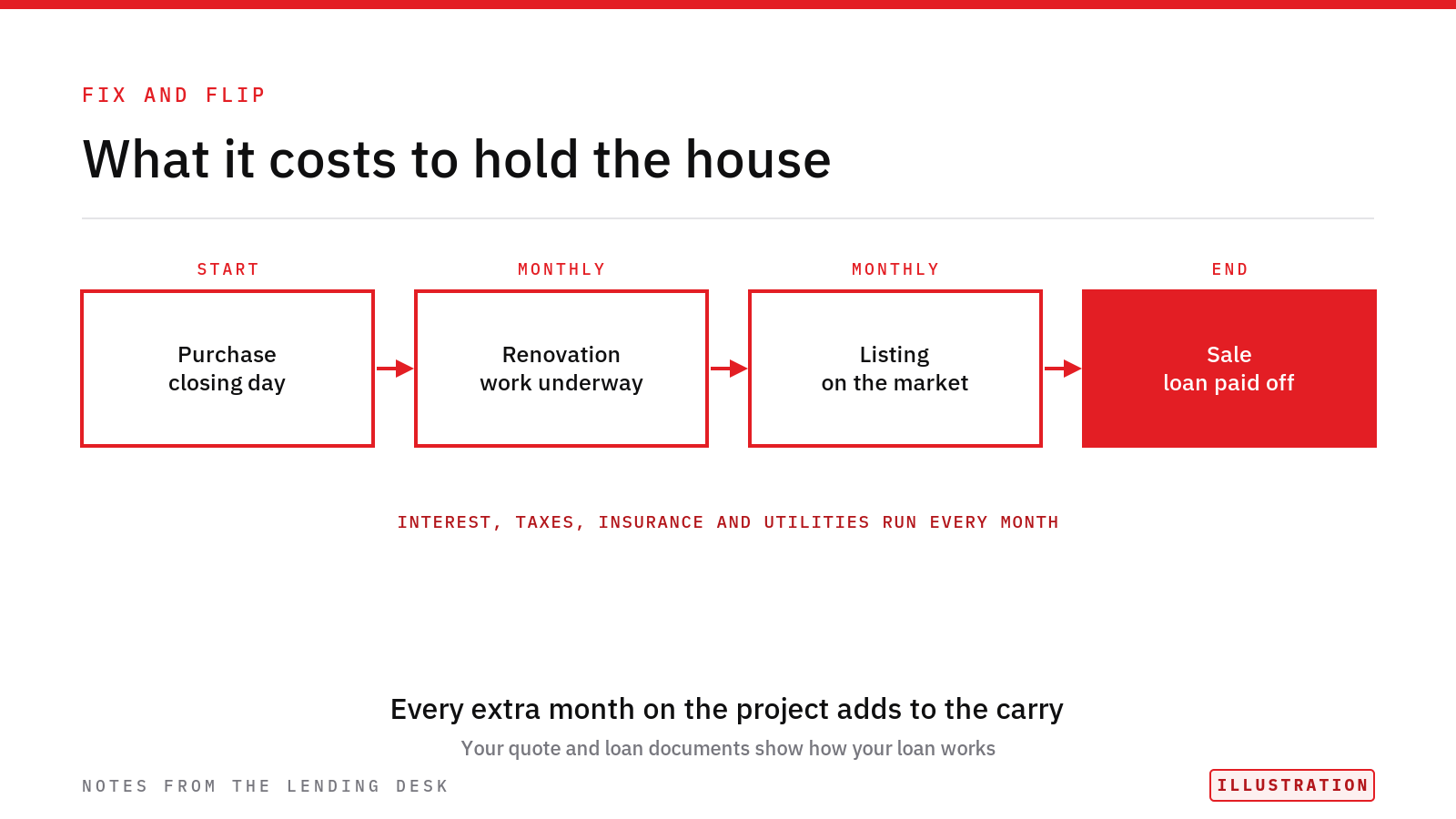
Most flip budgets focus on two numbers: what you pay for the house and what the renovation costs. The third number is quieter. It is what you spend every month just to own the property until it sells. That is your holding cost, and it grows with every week the project runs.
What counts as a holding cost
- Loan payments. Short-term investor loans are often interest only, so you pay interest each month.
- Property taxes for the months you own the property
- Insurance, often a vacant dwelling or builder's risk policy while the work is underway
- Utilities: electric, gas, water, sewer and trash, which contractors need on site
- HOA or condo dues, if the property has them
- Lawn care, snow removal and basic upkeep so the property stays safe and presentable
- Security or monitoring for a vacant property
Why time is the real driver
Most holding costs are monthly. A project that runs 2 months longer than planned costs 2 more months of interest, taxes, insurance and utilities. Delays rarely come from one big event. They come from a late permit, a contractor who leaves for another job or a house that sits on the market longer than expected.
Build holding costs into the budget
List each cost by month. Then multiply by a realistic timeline that covers purchase, permits, renovation, listing and closing on the sale. Add a cushion for the months you hope you will not need. If the deal only works when everything goes right, it is a thin deal.
How draws affect what you carry
On a financed rehab, renovation money is usually released against completed work, so the amount drawn rises as the project moves along. On some loans interest is charged only on the amount drawn. On others it is charged on the full loan amount from the start. Your quote and loan documents show which applies. Plan for the payment near the end of the project, not just the first one.
Ways investors keep holding costs down
- Line up permits, plans and contractor bids before closing
- Order materials with long lead times early
- Schedule trades so one finishes as the next is ready to start
- Price the finished house to sell, using comps that hold up
- Keep the property clean and ready to list as the work wraps up
Plan the exit with holding costs in mind
Holding costs are one reason the exit plan matters before you close. Know how you will pay off the loan, whether by a sale or a refinance, and roughly when. A clear timeline and a realistic monthly carry make the scenario easier to read and the project easier to manage.
Program figures are indicative only and subject to complete documentation, underwriting, appraisal and final credit approval. This post is general information, not financial or legal advice.