· Education · RED Lending
Inspections Before You Buy a Fix & Flip: What to Check and Why
The budget for a flip is only as good as what you know about the house. Here is what to inspect before you buy and how the findings feed your scope of work.
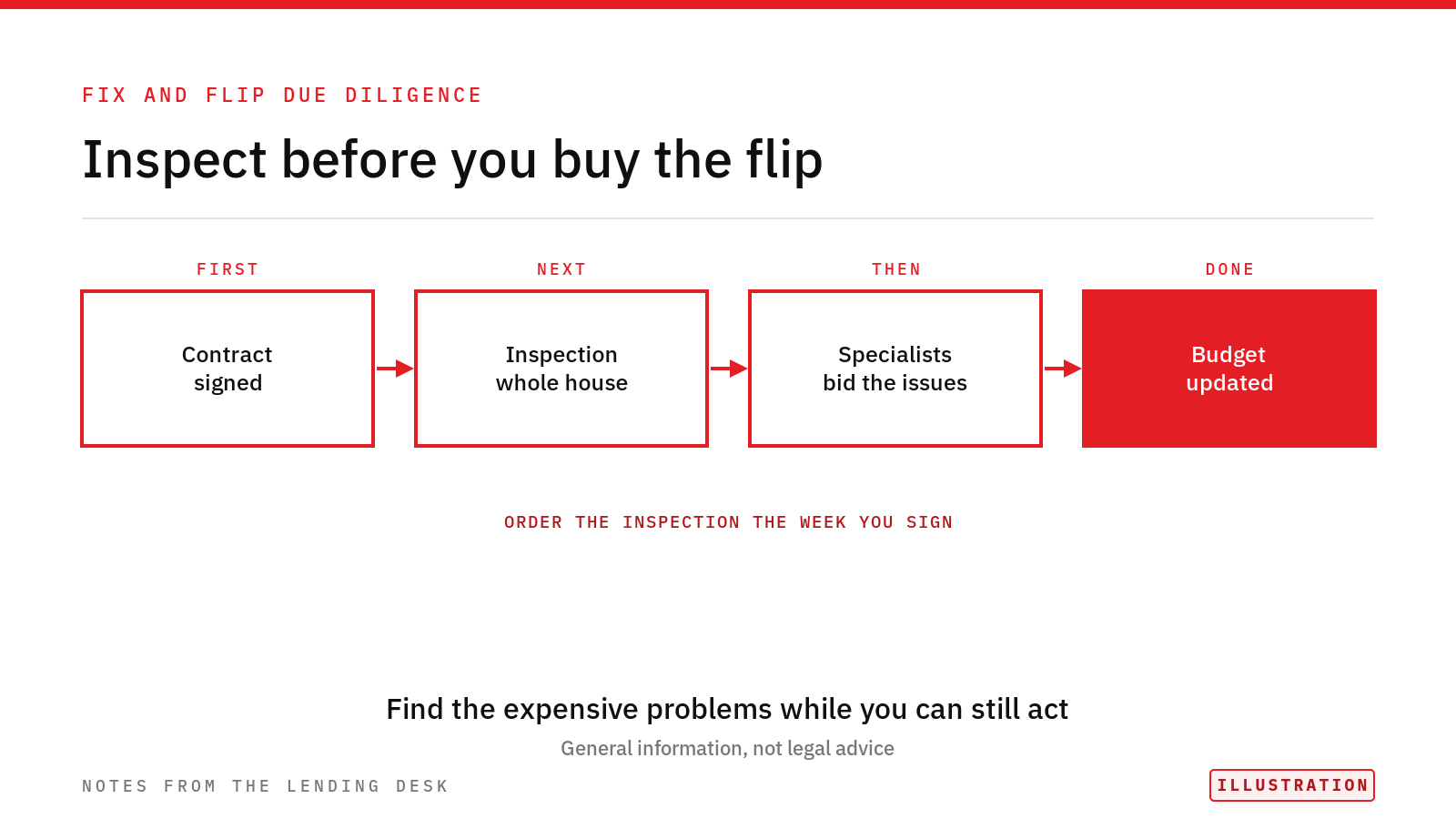
The budget for a flip is only as good as what you know about the house. An inspection before you buy is how you find the expensive problems while you can still change the price, the plan or your mind.
Why inspect a house you plan to renovate
Many investors skip the inspection because they plan to gut the house anyway. The costly items are usually the ones a renovation does not automatically fix: the foundation, the roof structure, the sewer line and the wiring behind the walls. Any one of them can change the budget, the timeline and the after-repair value you planned on.
What to look at closely
- Foundation and structure: cracks, sloping floors, sticking doors and water in the basement or crawl space
- Roof: age, layers, soft spots and signs of leaks in the attic
- Sewer line: a camera inspection can show roots, breaks or an old line that needs replacing
- Electrical: panel type and capacity, old wiring and work done without permits
- Plumbing: supply line material, the water heater and any active leaks
- Heating and cooling: age and condition of the furnace, boiler or condenser
- Water and moisture: staining, mold and grading that sends water toward the house
- Older homes: lead paint or asbestos, which change how the work has to be done
Bring in specialists when something looks off
A general home inspector looks at everything at a basic level. When the report flags a concern, a specialist can tell you what it will take to fix. A structural engineer, a roofer, a licensed electrician or a sewer contractor can turn a vague warning into a bid you can put in the budget.
Turn the findings into the budget
Every finding should land somewhere. Add it to the line-item scope of work, get a real number for it and decide whether it changes the deal. A lender reads your budget against the property and the appraisal. A budget that already reflects what the inspection found is easier to read and less likely to come up short halfway through the project.
Check the permit history
Many cities let you look up the permits pulled on a property. A finished basement, an addition or new electrical with no permit on record can mean extra work to bring it up to code. It is better to know that before you close than after the city inspector visits.
Leave time in the contract
An inspection only helps if you can act on what it finds. Talk with your agent or attorney about how the purchase contract handles inspections and how much time you have to complete them. Order the inspection as soon as the contract is signed so specialists have time to follow up.
What the inspection does not do
An inspection is not an appraisal, and it does not replace the lender's own review of the property. It is your tool for deciding what to pay and what to plan for. Keep the report with your scenario. It helps explain the scope of work when the desk asks why a line item is there.
Program figures are indicative only and subject to complete documentation, underwriting, appraisal and final credit approval. This post is general information, not financial or legal advice.