· Education · RED Lending
Insurance on an Investment Property Loan: What to Line Up Before Closing
Every loan file includes an insurance review. Here is what the policy usually needs to show, why a vacant rehab and a leased rental are insured differently, and what slows a file down.
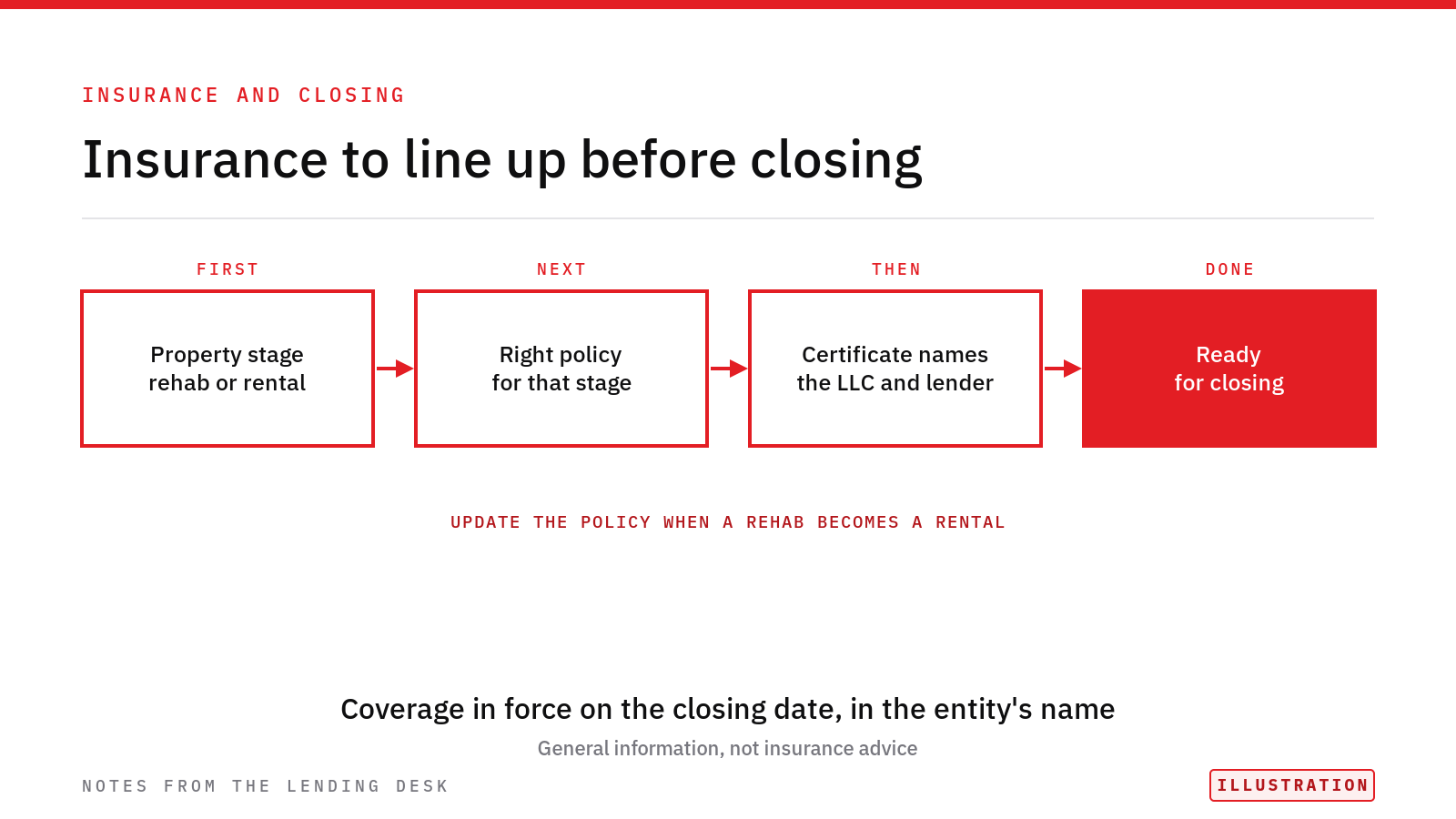
Insurance is easy to leave until the last week. That is often when it holds up a closing. Every loan on the site is subject to a title and insurance review, and the document list for each program includes an insurance certificate. Here is what that review usually looks at.
Why the lender reviews insurance
The property secures the loan. If it is damaged, the policy is what pays to repair it. The lender wants to see that the coverage is in place on the day the loan closes, that it fits how the property is being used and that the lender is named on it.
Match the policy to the property's stage
A home you live in is usually covered by a homeowners policy. An investment property held in an LLC usually is not. The right policy depends on what the property is doing.
- During a rehab, the property is often vacant and under construction. Ask your agent about a vacant dwelling policy or builder's risk coverage.
- Once it is leased, a landlord or dwelling policy is the usual fit. Some investors also carry loss of rents coverage.
- Liability coverage protects the owner if someone is hurt on the property. Ask your agent how much fits your situation.
If the property moves from rehab to rental, the policy should move with it. Tell your agent when the work is finished and a tenant moves in.
What the certificate usually shows
- The named insured, matching the LLC or corporation that holds title
- The property address, written the same way as on the contract and title
- Coverage that is in force on the closing date
- The lender named as mortgagee, using the clause the desk provides
- Your agent's name and contact details
Flood zones
Some properties sit in a mapped flood zone. If yours does, flood coverage is usually required on top of the regular policy. Check the flood map as soon as you have a contract. A flood policy can take time to put in place.
Condos and townhomes
Condominiums and many townhomes have a master policy held by the association. That policy may cover the building but not the inside of the unit. Ask the association for its certificate and ask your agent whether you need your own walls-in policy.
What slows a file down
- A policy written in a personal name instead of the entity's name
- A homeowners policy on a property that is not owner-occupied
- A missing or incorrect mortgagee clause
- Dates that start after closing or end before it
- Coverage that was not updated when a rehab turned into a rental
Line it up early
Call your agent the week you sign the contract. Tell them it is an investment property held in an LLC, and whether it will be vacant, under renovation or leased. Send the agent's contact details with your scenario so the desk can request the certificate directly.
Your insurance agent is the right person to advise on coverage. This post covers what a loan file typically needs, not which policy is right for you.
Program figures are indicative only and subject to complete documentation, underwriting, appraisal and final credit approval. This post is general information, not financial or legal advice.