· Education · Sayasone Phongvichith
LTC, LTV and ARV-LTV: The three numbers on every tear sheet
Every RED program page leads with leverage figures. Here is what LTC, LTV and ARV-LTV each measure, and why a program can show more than one.
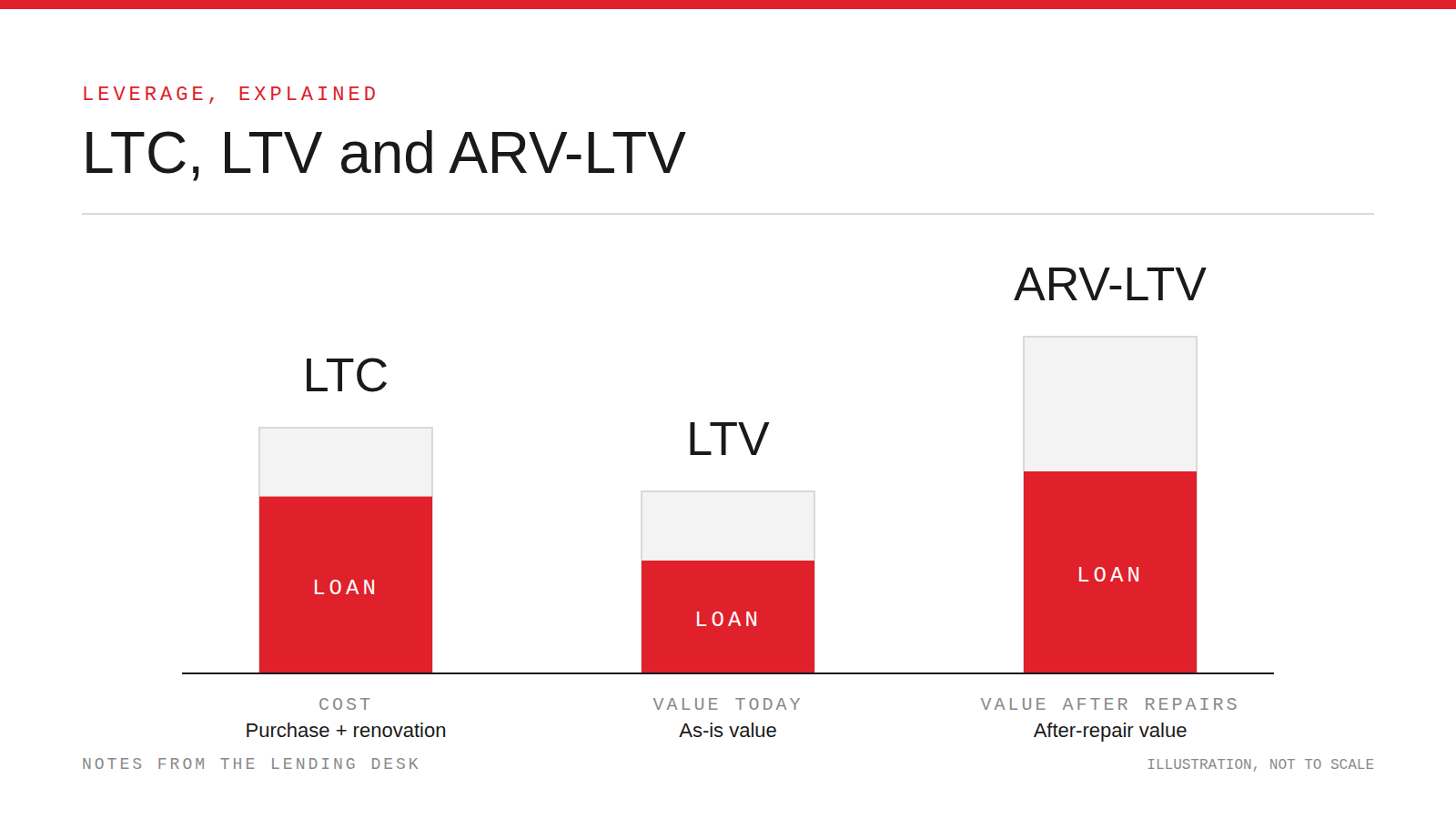
Open any RED program and the first figures you see are leverage limits. They look similar, but each one measures the loan against a different number.
LTC: loan to cost
LTC compares the loan to what the project costs you. It is the figure that matters most when you are buying and spending money to improve a property.
On Fix & Flip, the published maximum is 90% LTC, with up to 100% of the renovation budget financed. Stabilized Bridge shows 85% LTC, and Multifamily 5+ shows 70%.
LTV: loan to value
LTV compares the loan to what the property is worth, as confirmed by the appraisal. Rental programs lead with it because the property is already producing income.
On Rental Loan (DSCR), the maximum is 80% LTV on a purchase and 75% on a cash-out. Stabilized Bridge shows 70% LTV, and Multifamily 5+ shows 75% of as-is value.
ARV-LTV: loan to after-repair value
ARV-LTV compares the loan to what the property should be worth once the work is done. It applies to programs where value is being created. Fix & Flip shows a 75% maximum, and Ground-Up Construction shows 70%.
Why a program shows more than one
Each figure is a ceiling, and a loan has to sit within every limit its program sets. A deal with a modest purchase price but a thin ARV can be held back by ARV-LTV even when LTC has room, and the reverse can happen too.
That is why the desk asks for the purchase price, the renovation budget and the expected value together. With all three, we can tell you which limit is doing the work on your deal.
Where to find them
Every program's requirements are published on its page. If you are not sure which limit applies to your deal, send the numbers and the desk will tell you.
Program figures are indicative only and subject to complete documentation, underwriting, appraisal and final credit approval. This post is general information, not financial or legal advice.