· Education · RED Lending
Managing Contractors on a Financed Rehab
Renovation draws are released against completed work, so your contractor's pace sets your cash flow. Here is how to run the job so the paperwork keeps up.
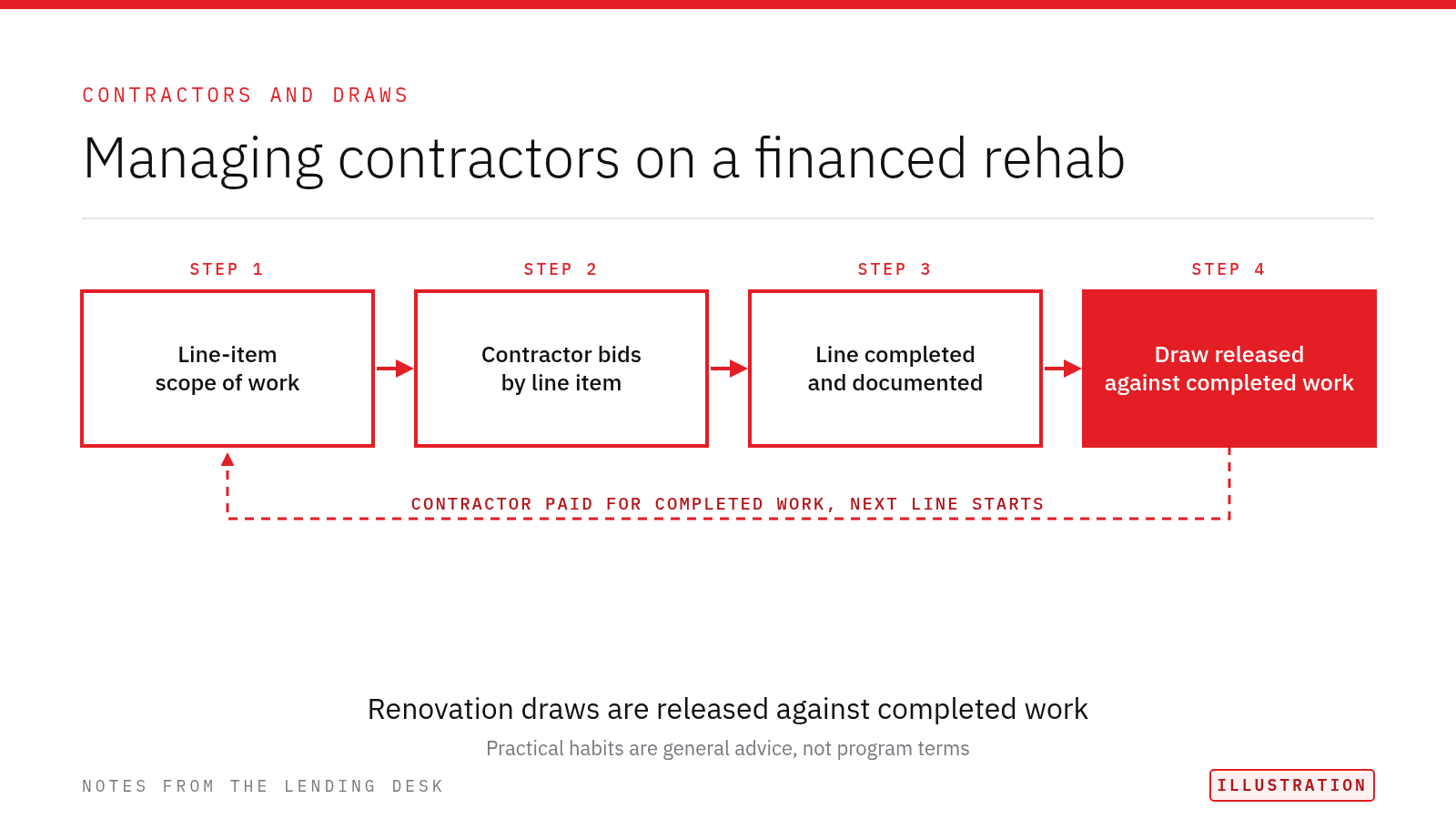
On a Fix & Flip loan, renovation draws are released against completed work. That one rule shapes how you manage your contractor. The money follows finished work, so your contractor's pace and your paperwork set your cash flow.
What the desk asks for
- A scope of work with a line-item renovation budget, on every Fix & Flip.
- An architect letter or permits where square footage is being added.
- A structural engineer report where there is fire damage.
- On Ground-Up Construction, the GC contract or license where applicable, and a line-item construction budget. The construction holdback is paid out on inspected draws.
Start with the line items
Ask each contractor to bid against your line items, not a single lump sum. When the bid and the budget use the same lines, a finished line is easy to point to and easy to verify.
Match payments to draws
- Pay for completed work, the same way draws are released.
- Large deposits that run ahead of finished work leave a gap you carry yourself.
- Agree in writing on what complete means for each line before work starts.
Keep changes in writing
Scope changes happen. Put every change order in writing, with its cost and the line it affects. Tell the desk before the scope changes on the job, not after.
Keep the record
- Invoices filed by line item
- Dated photos of each finished line
- Permits and inspection sign-offs where they apply
Watch the calendar
A Fix & Flip is a short-term loan with the balance due at maturity. A contractor who falls behind uses up your term. Build slack into the schedule and check progress every week.
Terms are set deal by deal.
This post is general information, not financial, legal or tax advice. All loan terms are subject to underwriting and credit approval.