· Education · RED Lending
Property Management on a Rental: Doing It Yourself or Hiring a Manager
Once a rental closes, the property has to perform month after month. Here is how to think about managing it yourself or hiring a manager, and the records worth keeping either way.
A rental loan is underwritten on the property. Once it closes, the property has to perform month after month. Who manages it is one of the first decisions an investor makes, and it affects time, cash flow and how the property holds up.
What a property manager does
- Markets the unit and shows it to applicants
- Screens tenants under fair housing rules
- Prepares and signs leases
- Collects rent and follows up on late payments
- Handles maintenance requests and coordinates repairs
- Conducts move-in and move-out inspections
- Keeps records and sends owner statements
Managing it yourself
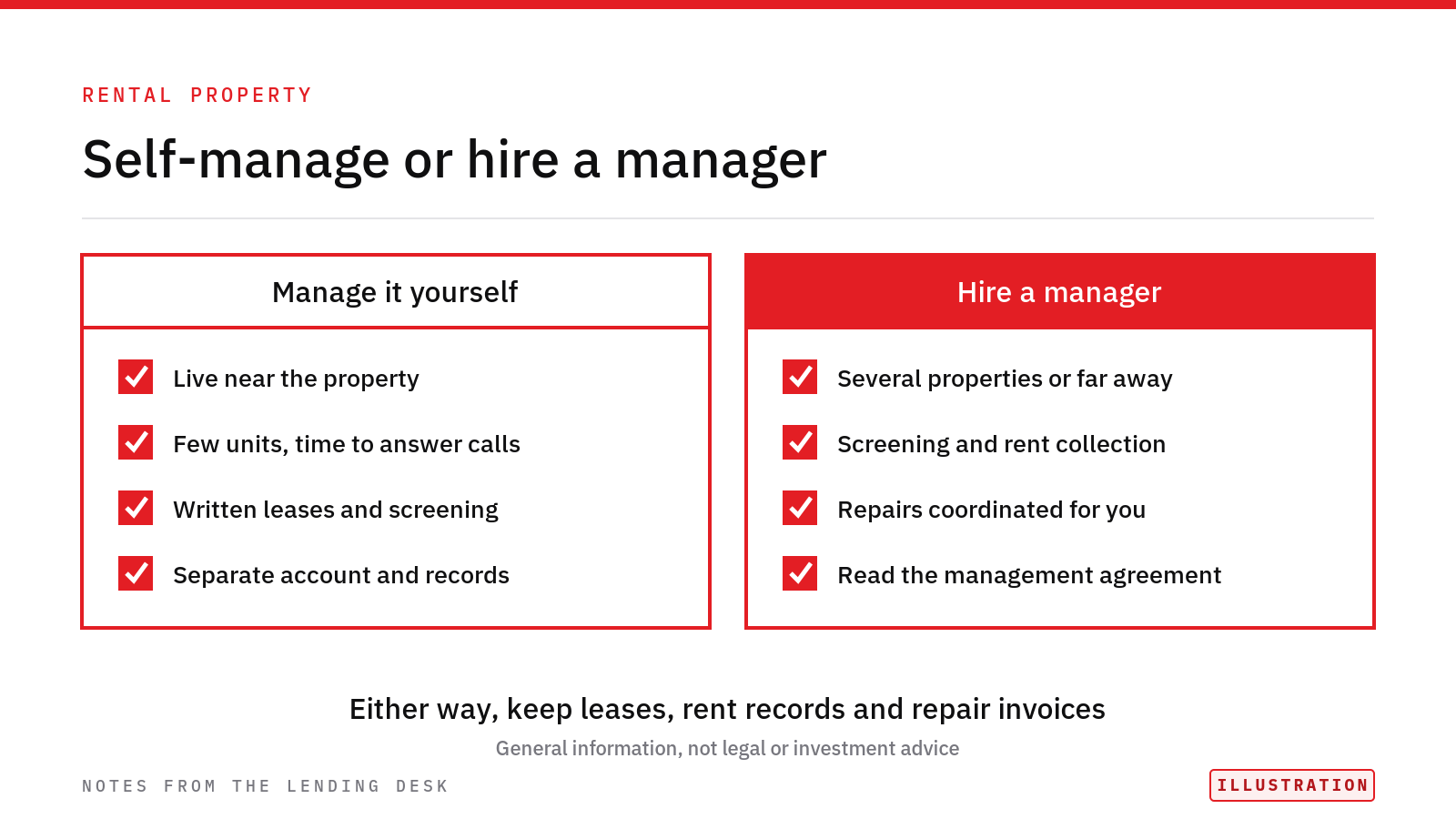
Self-managing can make sense when you live near the property, own a small number of units and have time to answer calls. You keep the management fee and see every detail. The tradeoff is your time. Tenant calls do not wait for a convenient hour, and vacancies and repairs need quick attention.
If you self-manage, treat it like a business. Use written leases, a consistent screening process and a separate bank account for the property. Keep receipts and records for every repair. Landlord and tenant rules vary by state and city, so learn the ones that apply where the property sits.
Hiring a manager
A manager can make sense when you own several properties, live far away or want to spend your time finding the next deal. Ask how they screen tenants, how fast they fill vacancies, how they handle repairs and what reports you will get. Read the management agreement closely, including how fees are charged and how either side can end it.
How management affects the numbers
Management has a cost whether you pay a company or pay with your own time. Include it when you estimate cash flow on a rental. Vacancy, repairs and turnover also hit the numbers, and good management can keep each of them down.
Records that help at refinance or sale
Good management leaves a paper trail: signed leases, rent collection records, repair invoices and a current rent roll. Those documents matter when you refinance, sell or add the property to a portfolio. A lender reviewing a rental often asks for leases and proof that rent is being paid.
Questions to ask before you decide
- How far do you live from the property?
- How many units do you own now, and how many do you plan to add?
- How many hours a month can you give the property?
- Do you know the local landlord and tenant rules?
- Do you have reliable contractors for repairs?
There is no single right answer. Some investors self-manage their first rental and hire a manager as the portfolio grows. Whichever path you choose, run the property like the business it is.
Program figures are indicative only and subject to complete documentation, underwriting, appraisal and final credit approval. This post is general information, not financial or legal advice.