· Education · RED Lending
Reserves, Liquidity and Net Worth: What They Mean on a Loan File
Lenders look at more than credit and experience. Here is what reserves, liquidity and net worth mean, why a lender checks them and what documents show them.
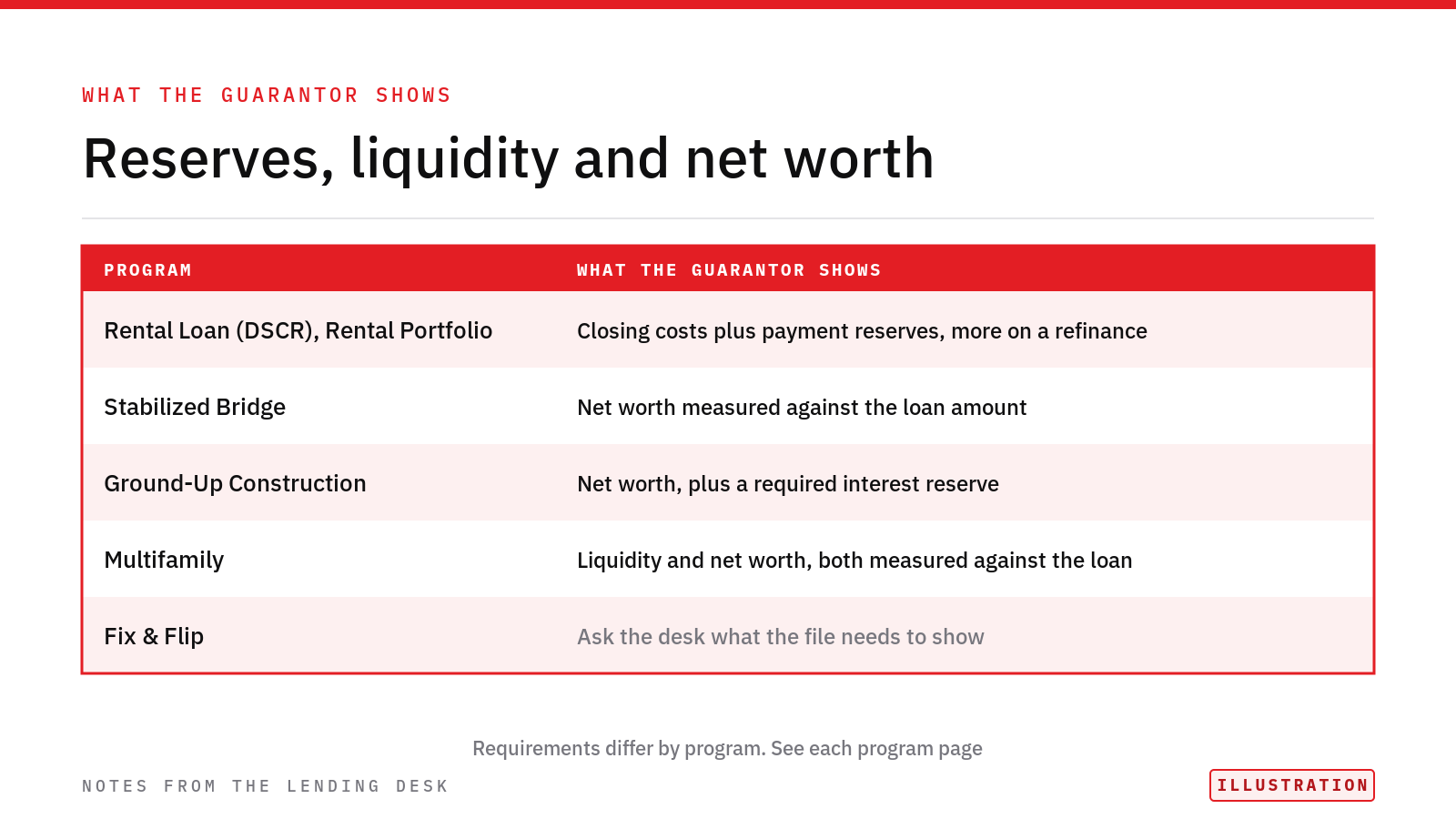
Credit and experience get most of the attention on a loan file. Lenders also look at the guarantor's cash and overall financial position. Three terms come up again and again: reserves, liquidity and net worth. Here is what each one means and how a lender reads it.
What the 3 terms mean
Reserves are cash set aside to cover the loan payments and costs after closing. On a rental loan, reserves are often counted in terms of the monthly payment, which includes principal, interest, taxes, insurance and any association dues.
Liquidity is money you can reach quickly. Checking and savings accounts count. Some investment accounts may count too. Money tied up in property, a business or a retirement account is usually treated differently, because it takes time or cost to get to.
Net worth is what you own minus what you owe. It includes real estate equity, business interests and other assets, less mortgages and other debts.
Why a lender looks at them
Projects do not always go to plan. A unit sits vacant. A contractor falls behind. A sale takes longer than expected. Reserves and liquidity show the lender there is cash to carry the project through a slow stretch. Net worth shows the overall strength behind the personal guarantee.
Some programs also set aside an interest reserve at closing. That is money held back to cover a set number of interest payments, so the loan is paid during the early part of the project.
What documents typically show them
- Recent bank statements, showing the account holder's name and the full balance history
- Brokerage or investment account statements
- A personal financial statement listing assets and debts
- Schedule of real estate owned, with values and loan balances
- Entity documents, if funds sit in a business account
What counts, and how much is needed, depends on the program and the deal. Terms are set deal by deal.
Common mistakes that slow a file
- Large deposits with no explanation. A big deposit that just landed in an account will raise questions. Expect to show where it came from.
- Counting the same money twice. The cash for the down payment and closing costs cannot also be counted as reserves.
- Statements from many small accounts. Funds spread across several accounts take longer to verify. Clean, complete statements are easier to read.
- Missing pages. Lenders usually ask for every page of a statement, including the blank ones.
- Funds held in someone else's name. Money in another person's account, or in an entity you do not own, is treated differently. Ask the desk before you rely on it.
- Leaving reserves for last. Planning for the purchase price and the rehab budget, but not the reserves, can hold up a closing.
Bring it up early
If you are not sure how your accounts will read, send the scenario and ask the desk what applies. It is easier to sort out sourcing questions before the file is in underwriting than after.
This post is general information, not financial, legal or tax advice. All loan terms are subject to underwriting and credit approval.