· Education · RED Lending
Selling the Flip: Pricing, Listing and Paying Off the Loan
The sale is where a flip earns its money. Here is how to plan the listing, price the house and handle the loan payoff at closing.
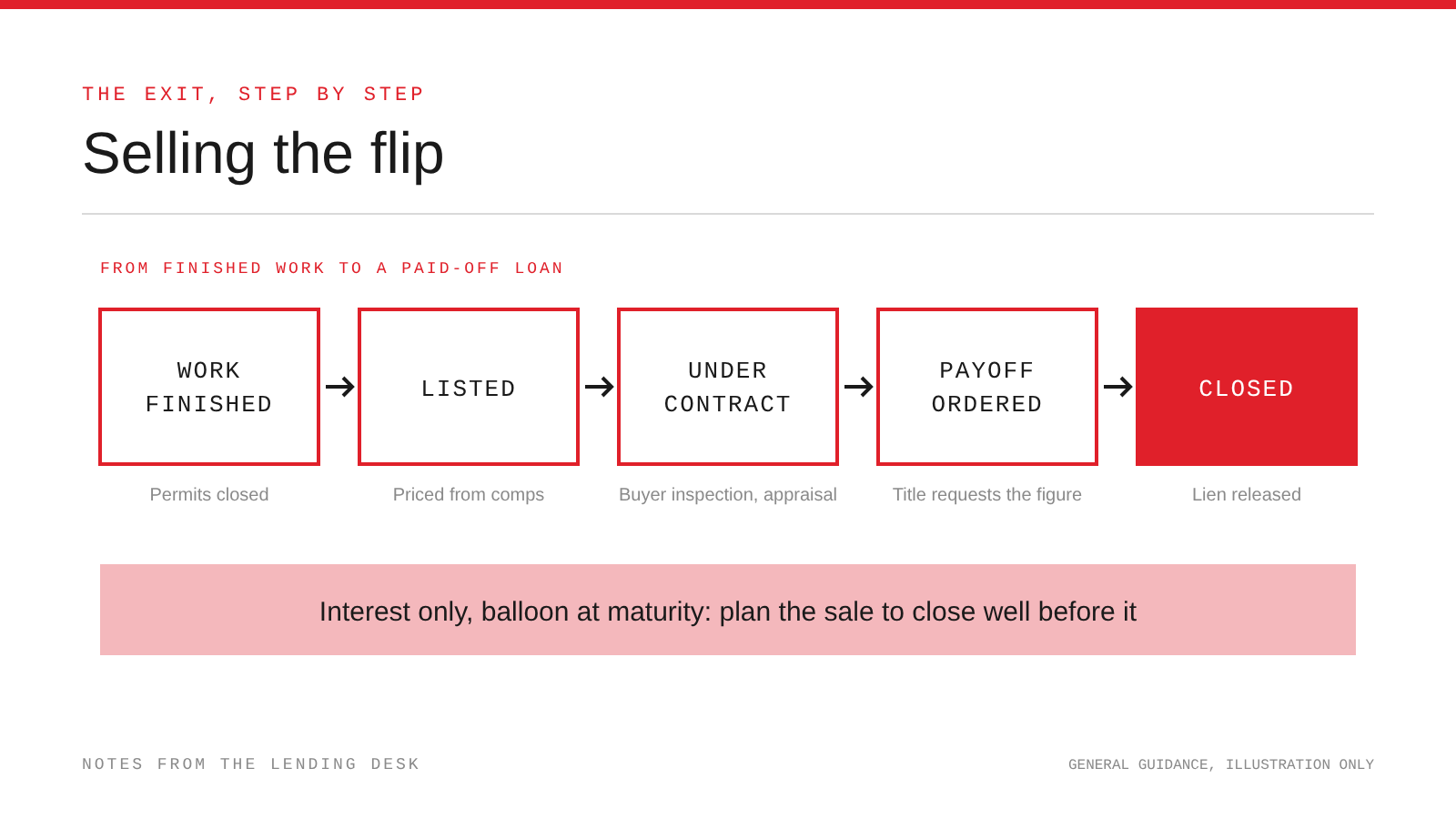
Every flip is planned around the sale, but the sale itself often gets the least planning. Pricing, timing and the payoff at closing decide how much of the profit you keep and whether the loan is paid off before it comes due.
Plan the sale before the work is done
Bring in a listing agent while the work is still underway. A good agent can tell you which finishes local buyers expect and which ones they will not pay for. Set a target list date and work back from it, so photos, cleaning and staging are ready when the last trade leaves.
Price from the comps, not the budget
Buyers do not care what you spent. Price from recent sales of similar renovated homes nearby. A house priced right in the first two weeks usually draws the most attention. A house that starts high and cuts its price later can sit, and every month adds interest, taxes, insurance and utilities.
Get the house ready to show
- Finish the punch list before the first showing
- Close out permits and keep the final inspection sign-offs
- Gather receipts, warranties and a list of the work done
- Clean thoroughly and fix anything a buyer's inspector will flag first
A buyer's inspector and the buyer's appraiser will both see the house. Clean paperwork on the work you did answers their questions before they become price cuts.
Count the cost of selling
The sale price is not what you take home. Agent commissions, transfer taxes, title and closing fees, any credits you give the buyer and your holding costs until closing all come out first. Run those numbers before you set the price, not after the offer comes in.
Watch the calendar
Our short-term loans are interest only with a balloon at maturity, and Fix & Flip has a 12-month term. The full balance is due at the end of the term, whether or not the house has sold. Plan for the sale to close with room to spare, and allow for a buyer whose financing falls through. If the schedule is slipping, talk to us early.
Order the payoff
When the house goes under contract, the title or escrow company requests a payoff statement from the lender. The statement shows the balance, interest through a set date and any fees. If closing moves, ask for an updated payoff so the figure is right on the day. At closing, the loan is paid from the sale proceeds and the lien is released.
After closing
Compare what you spent with the budget and the schedule you started with. Keep the closing statement and the record of the work. A completed, documented project is part of the track record you show on your next deal.
Program figures are indicative only and subject to complete documentation, underwriting, appraisal and final credit approval. This post is general information, not financial or legal advice.