· Education · RED Lending
Sequencing a Rehab: The Order the Work Gets Done
A rehab can run long when the work happens out of order. Here is the sequence most renovations follow, from permits and demolition to finishes and final inspections.
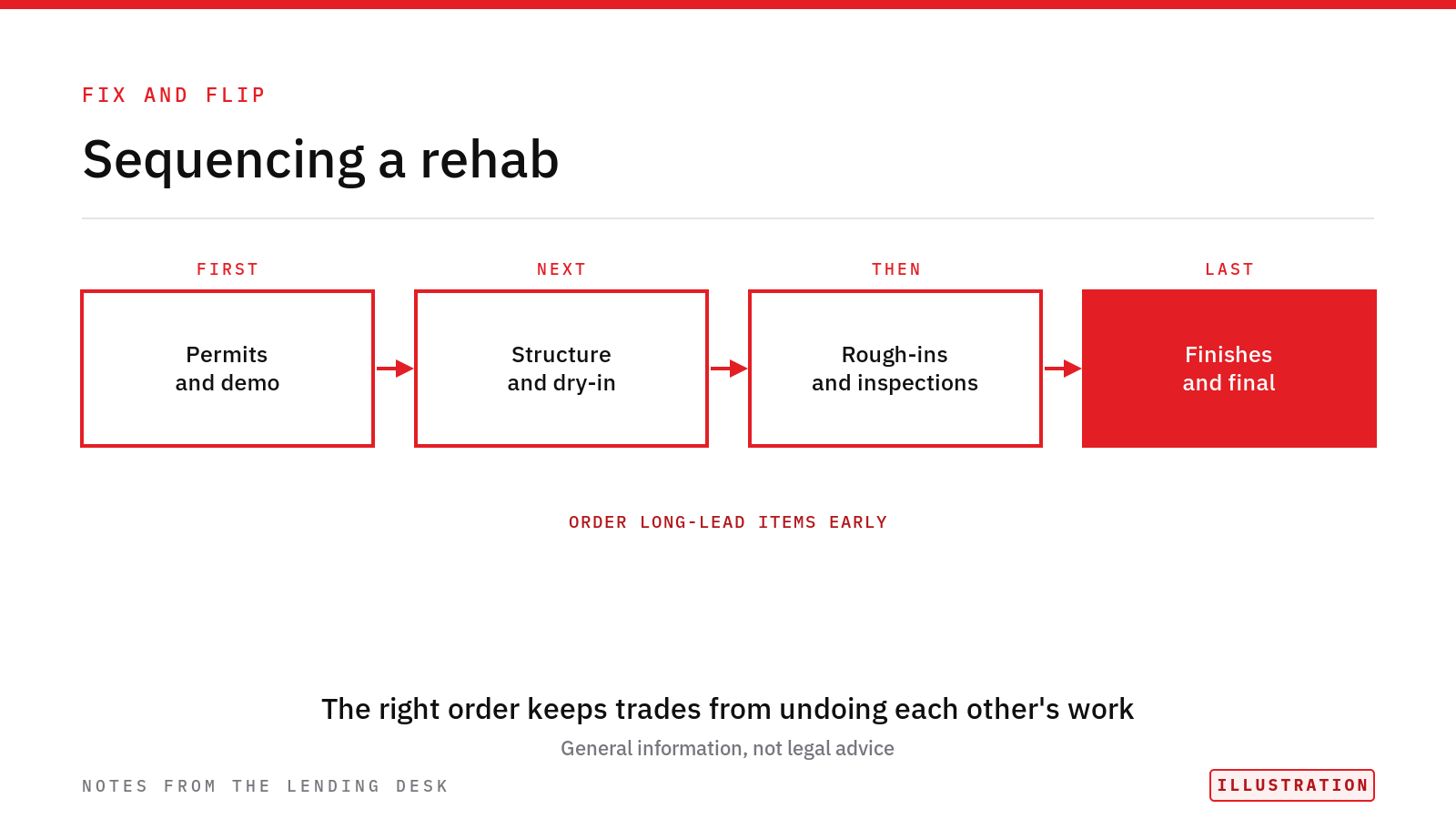
A strong budget can still run long if the work happens in the wrong order. Paint goes on before the electrician is done. New floors get scratched when the drywall crew arrives. A city inspector asks to see wiring that is already behind finished walls. Each one costs time, and on a flip, time costs money. Here is the order most renovations follow.
Plans and permits
Start with the scope of work and the permits it needs. Some jobs need drawings before the city will issue a permit. Apply early, because permit timing is often outside your control. Order long-lead items now too. Windows, custom cabinets and some appliances can take weeks to arrive.
Demolition and cleanout
Clear out debris, remove what is being replaced and open the walls and floors where work is planned. Demolition often reveals hidden problems such as rot, old wiring or past water damage. Update the budget as soon as you find something, while there is still time to adjust the plan.
Structure and dry-in
Fix the bones before anything else. That means foundation repairs, framing, the roof and any structural changes. Then make the house weathertight with the roof, windows and exterior doors. Work done inside before the house is dry is at risk from the next storm.
Rough-ins and inspections
With the walls open, the plumber, electrician and heating and cooling contractor run new lines, wiring and ductwork. This is the rough-in stage. Most cities inspect rough-in work before the walls are closed. Schedule those inspections ahead of time so the drywall crew is not waiting on a sign-off.
Insulation and drywall
Once rough-ins pass, insulation goes in and the walls are closed. Drywall, taping and sanding are messy, so they come before any finished surfaces.
Finishes
- Primer and the first coat of paint
- Cabinets, countertops and built-ins
- Flooring, usually after cabinets and most of the messy work
- Trim, doors and hardware
- Light fixtures, outlets, plumbing fixtures and appliances
- Final paint touchups
Final inspections and punch list
Schedule final inspections to close out the permits. Walk the house with the contractor and write a punch list of every small item left to fix. Finish with exterior cleanup, landscaping and a deep clean before photos and showings.
How the order ties to your draws
On a financed rehab, renovation funds are usually released in draws after completed work is inspected. A clear sequence makes each draw easier to request because finished stages are easy to see and verify. Match your contractor payment schedule to the same stages so cash is available when each trade finishes.
Keep the schedule in writing
Write the sequence down with target dates for each stage and share it with every contractor. Update it when something slips. A written schedule keeps trades from stepping on each other and shows you early when the project is falling behind.
Program figures are indicative only and subject to complete documentation, underwriting, appraisal and final credit approval. This post is general information, not financial or legal advice.