· Education · RED Lending
Duplexes, Triplexes and Fourplexes: What Changes When a Rental Has More Units
A duplex, triplex or fourplex is still a residential rental, but it runs differently from a single-family home. Here is what changes with more units under one roof.
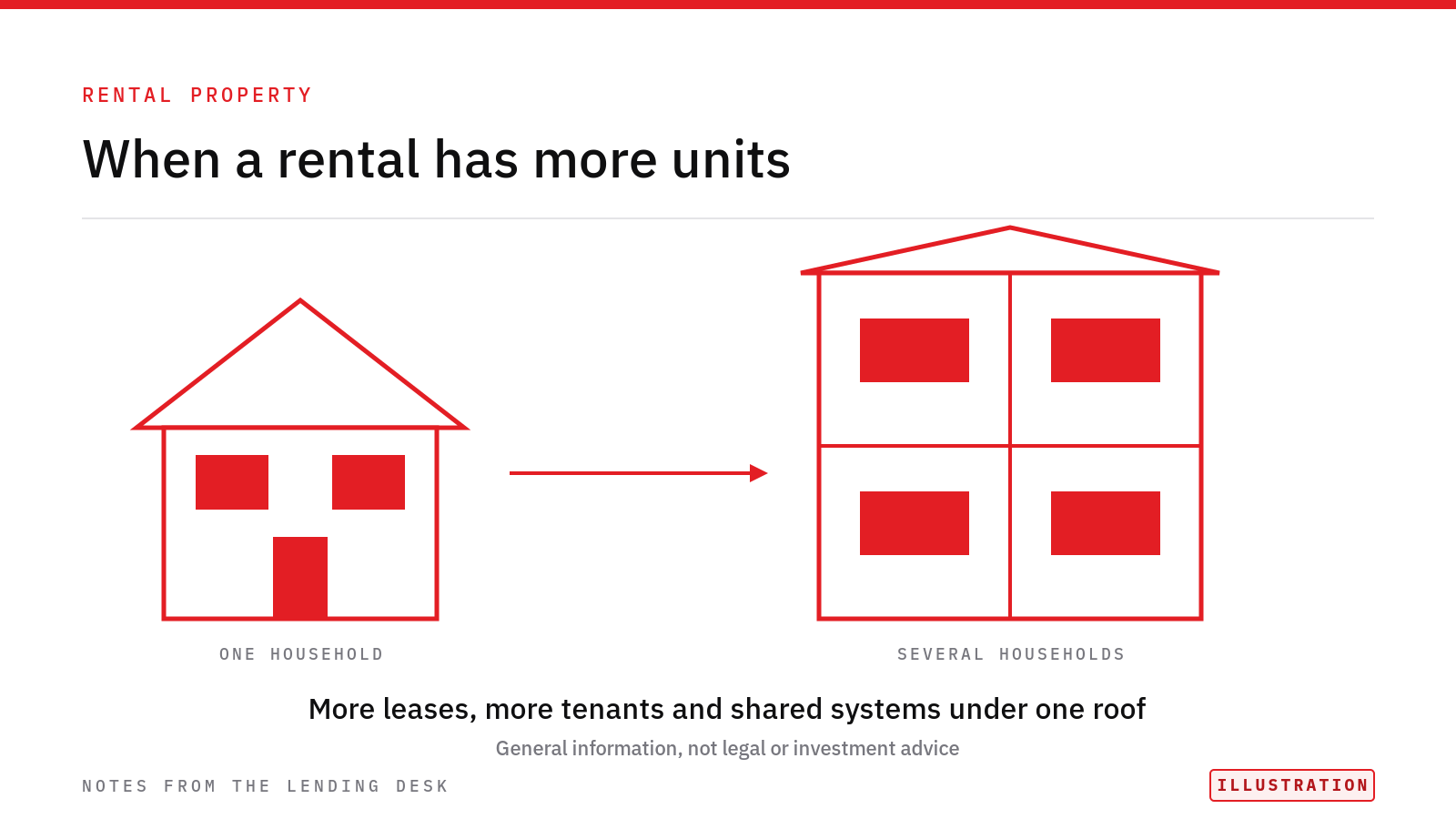
Many investors move from a single-family rental to a duplex, triplex or fourplex. It is still a residential property, and it can still fit a residential rental loan. But a building with several units runs a little differently. Here is what changes when one roof covers more than one household.
Income comes from several leases
A single-family rental has one lease and one rent check. A fourplex has four. That spreads the risk. One vacancy does not take the whole income to zero. It also means more leases to review, more tenants to screen and more move-ins and move-outs over a year. A current rent roll that matches the signed leases becomes one of the most important documents you keep.
Utilities and meters
Find out how the utilities are set up. Some buildings have separate meters for each unit, so tenants pay their own electric or gas. Others have one meter for the whole building, and the owner pays. Water and trash are often billed to the owner either way. Who pays what changes your expenses, so check the utility bills and the leases before you buy.
Shared systems and common areas
Units in one building often share a roof, a foundation, a boiler or a sewer line. When one of those needs work, it affects every unit at once. Hallways, stairs, laundry rooms and yards are common areas the owner maintains. A good inspection looks at each unit and at the building as a whole.
Local rules can be different
Many cities treat multi-unit rentals differently from single-family homes. There may be rental licensing, regular inspections, fire separation between units or rules on how many units the zoning allows. Check with the city or county before you buy. Confirm the number of units is legal and matches public records. A unit that was added without approval can be a problem for the appraisal, the loan and the insurance.
How the appraisal looks at it
An appraiser values a small multifamily property against sales of similar buildings nearby, not single-family homes. The appraisal also looks at market rent for each unit. That is one more reason to keep rents, leases and unit counts accurate. When the documents agree with what the appraiser sees, the file is easier to read.
Management takes more time
More units mean more calls, more turnovers and more repairs. Some owners self-manage a duplex and hire a manager once they own several buildings. Whichever you choose, build management into your cash flow estimate. Your time has a cost even when you do not write a check for it.
Where the line is
Residential rental loans are generally built for properties with up to 4 units. A building with 5 or more units is usually treated as commercial multifamily and financed with a different type of loan. If you are looking at a larger building, ask the desk which program fits before you make an offer.
Program figures are indicative only and subject to complete documentation, underwriting, appraisal and final credit approval. This post is general information, not financial or legal advice.