· Education · RED Lending
Title Review: What the Title Company Checks Before Your Loan Closes
Title is one of the first items requested in underwriting. Here is what a title commitment shows, the items that most often hold up a closing and how to get ahead of them.
Once a scenario moves into underwriting, appraisal, title and entity documents are requested. Title is the piece many investors know least about. It is also one of the most common reasons a closing date slips.
What title work is
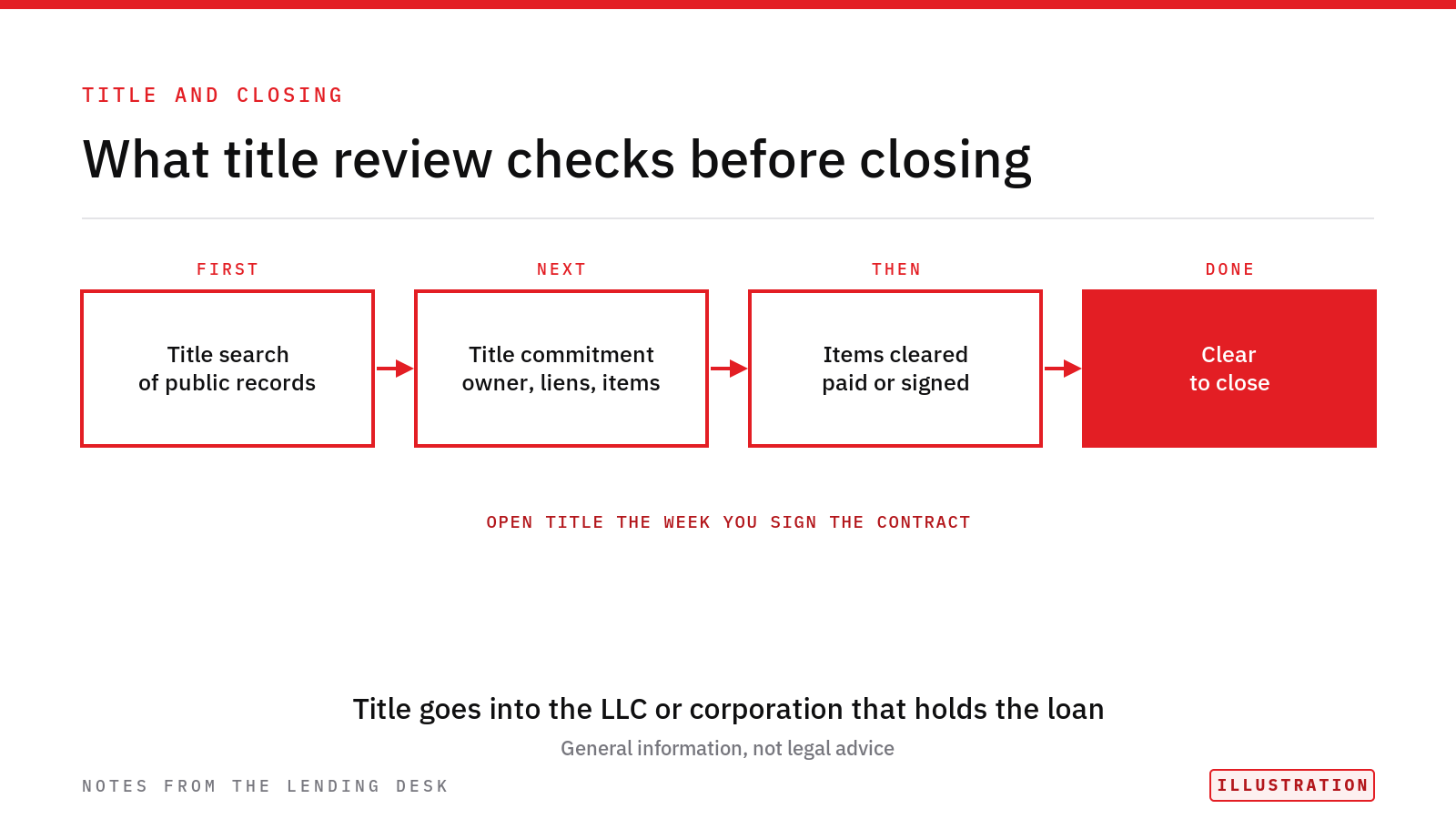
A title company searches the public records for the property. It looks at who owns it, what is recorded against it and whether anything stands in the way of a clean transfer or a new loan. The result is a title commitment. At closing, the title company issues a lender's title policy that protects the lender's lien. Buyers can also buy an owner's policy. Ask your title company what that covers.
What the commitment shows
- The current owner of record, called the vesting
- The legal description of the property
- Existing mortgages, liens and judgments
- Unpaid property taxes or municipal charges
- Easements, association covenants and other recorded items
- The requirements that must be met before closing
Read the requirements section closely. That is the to-do list. Each item on it has to be cleared, paid or signed before the loan can fund.
Title goes into the entity
An LLC or corporation must hold title on every loan. The entity name should match exactly across the purchase contract, the title commitment, the insurance certificate and the loan documents. A small difference in a name can mean a corrected document and a delay. If you own a property personally and want to refinance it, talk to your attorney about moving it into the entity before you apply.
Items that often hold up a closing
- An old mortgage that was paid off but never released of record
- Mechanics liens filed by a contractor who worked for a prior owner
- Judgments against a seller, or against someone with a similar name
- Unpaid taxes, water bills or code violation charges
- Estate or probate sales that need proof of authority to sell
- A gap in the chain of contracts on an assigned deal
Most of these can be cleared. They just take time, and some need the seller's help.
How to get ahead of it
- Open title the week you sign the contract.
- Use a title company that closes investor and entity transactions regularly.
- Send your entity documents to the title company early.
- Read the commitment when it arrives and ask about anything unclear.
- Ask the seller about any known liens or open permits.
- On a refinance, have your current lender's details ready for the payoff.
Tell the desk who is handling title
Include the title company's contact details with your scenario. The sooner the commitment is in the file, the sooner any issues surface. An early problem is easier to fix than a late one.
Program figures are indicative only and subject to complete documentation, underwriting, appraisal and final credit approval. This post is general information, not financial or legal advice.