· Education · Sayasone Phongvichith
What DSCR means, and what 1.05x, 1.10x and 1.25x look like
On a rental loan, the leverage figure is only half the picture. DSCR is the other half. Here is what it measures and where it appears on our programs.
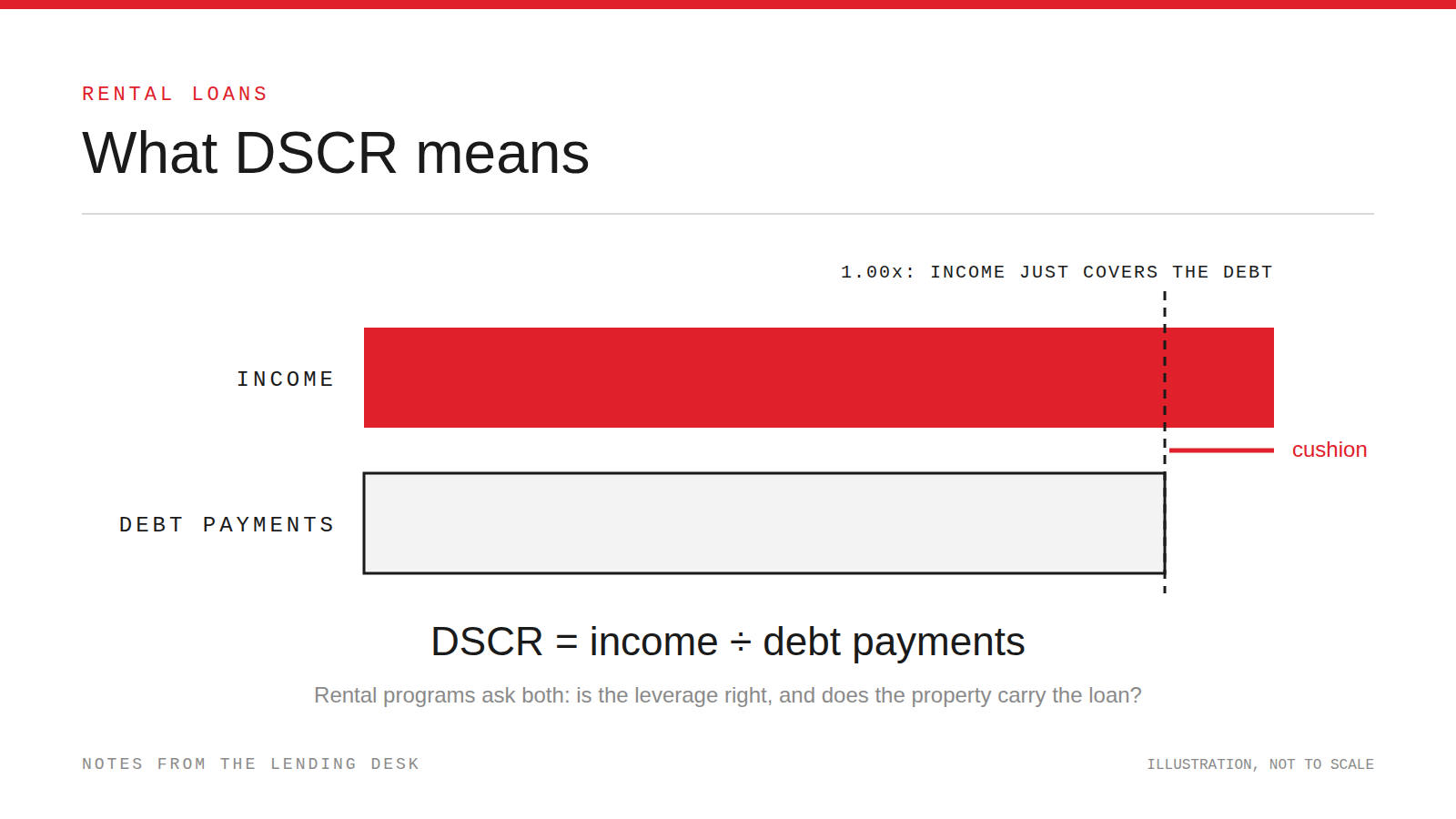
This week we looked at LTC, LTV and ARV-LTV, the numbers that size a loan against cost and value. Rental programs add a second test. It asks whether the property earns enough to carry the loan.
DSCR in plain terms
DSCR stands for debt service coverage ratio. It compares what a property earns with what its debt costs to carry. A DSCR of 1.00x means the income just covers the debt payments. Anything above 1.00x means there is some cushion.
For example, if a property brings in $2,100 a month against $2,000 of monthly debt payments, its DSCR is 1.05x. These are made-up numbers for illustration only.
Why it matters on a rental loan
Our Rental Loan (DSCR) is qualified on the property's cash flow, not personal income, and requires no tax returns. That makes DSCR the test that decides whether the property can carry the loan on its own.
Where the numbers appear
The figures published on our programs are:
- Rental Loan (DSCR): 1.05x minimum, with up to 80% LTV on a purchase and 75% on a cash-out.
- Rental Portfolio: 1.05x minimum, for 2 to 10 properties in one loan.
- Stabilized Bridge: a 1.10x DSCR exit option.
- Multifamily 5+: 1.25x stabilized DSCR.
The higher figures reflect the program's purpose. A bridge loan looks ahead to the rental financing that could replace it, and a multifamily transition looks ahead to a stabilized building.
Putting it together
On a rental, you need to clear both tests: the leverage limit and the DSCR minimum. If a property misses on DSCR, adding rent, lowering the loan amount or choosing a different program may change the picture.
Ask the desk
Send the address, the rents and your numbers. We will tell you which program fits, or say plainly if none does.
Program figures are indicative only and subject to complete documentation, underwriting, appraisal and final credit approval. This post is general information, not financial or legal advice.