· Education · RED Lending
Where Flip Deals Come From: Finding Your Next Property
Most good flips are found, not listed at a bargain. Here is where investors look for properties, what each source is good for and how to screen a lead fast once you find it.
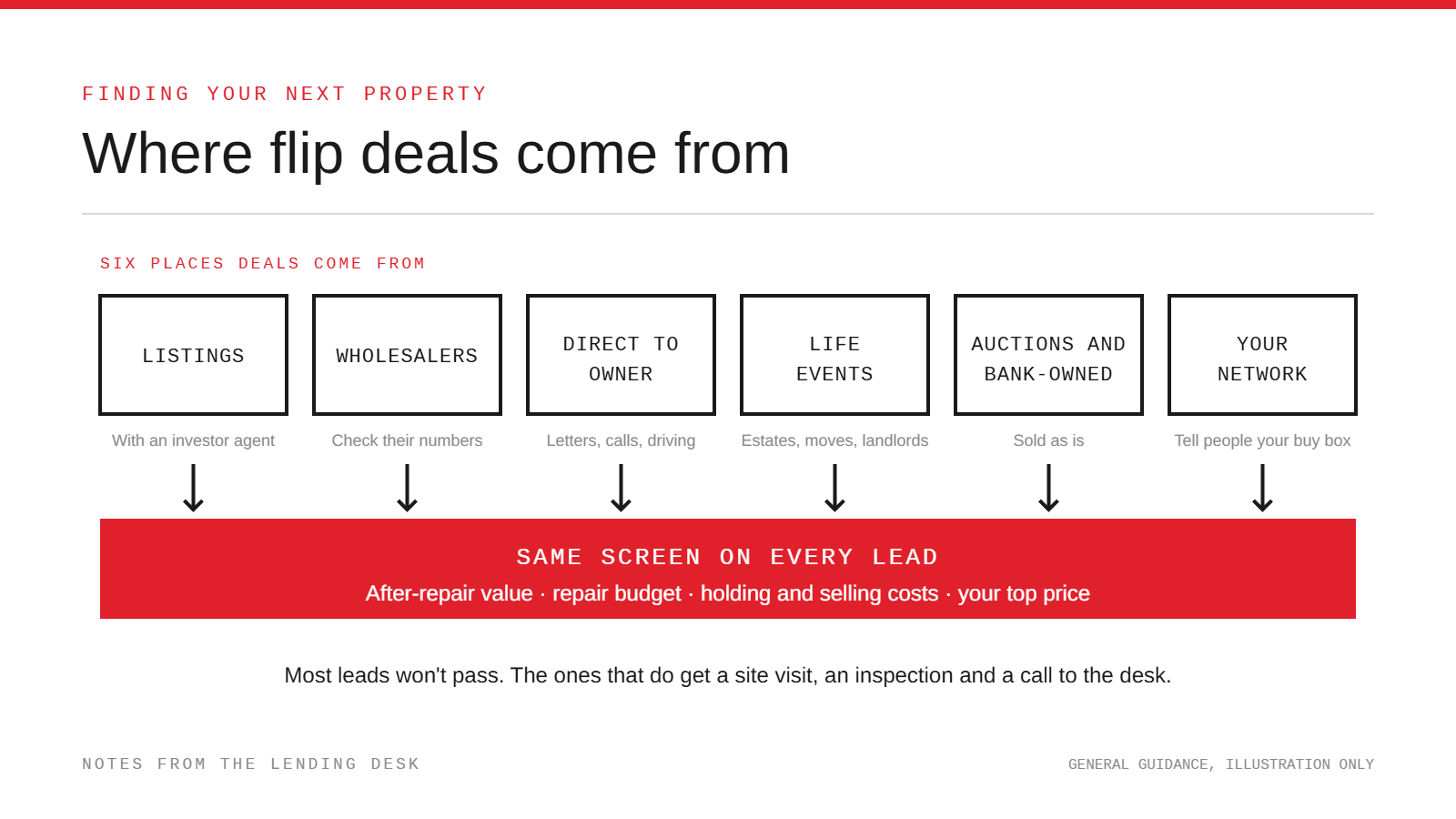
A flip is often made or lost at the purchase price. That makes finding the deal as much a part of the job as the renovation. Most investors work several sources at once, because each one turns up a different kind of property and a different kind of seller.
The listing service, with an agent who knows investors
Listed homes are the easiest to find, and every other buyer can see them too. The ones that work for a flip tend to be dated, long on the market, priced for their condition or sold as is. An agent who works with investors can set alerts for these and tell you when a seller cuts the price or a contract falls through.
Wholesalers
A wholesaler puts a property under contract and assigns the contract to a buyer for a fee. Good wholesalers find off-market sellers you might never reach yourself. Their numbers are a sales pitch, though, so check the after-repair value, the repair estimate and the comps on your own. Our 1 to 4 unit programs allow assignment fees within published limits, and the desk will want the original contract and the assignment.
Direct to the owner
Some investors reach owners directly with letters and calls, or by driving neighborhoods and noting vacant or run-down houses. It is slow and takes steady effort, but the sellers you reach have often not talked to anyone else. Follow your state's rules on calls and texts, and keep a simple list of every owner you contact and when.
Life events
Estates, divorces, job moves, tired landlords and owners behind on taxes all lead to sales. Probate attorneys, estate sale companies, property managers and local landlord groups often hear about these first. Treat sellers in a hard moment with patience. A fair, clear offer builds the kind of reputation that brings the next referral.
Auctions and bank-owned homes
Foreclosure auctions and bank-owned homes can turn up properties below market, but each comes with its own rules. We covered auctions on Nov 20. Bank-owned homes are usually listed by an agent and sold as is, with the bank's own addenda and timelines.
Your own network
Contractors, title officers, other investors and past sellers all see deals. Tell people what you buy, where and in what price range. A clear buy box makes it easy for others to send you the right property.
Run the same numbers on every lead
Wherever a lead comes from, run the same quick screen before you spend time on it:
- After-repair value from recent nearby sales
- A rough repair budget, with a contingency
- Holding and selling costs for a realistic timeline
- The most you can pay and still make the profit you need
Most leads will not pass. That is normal. The ones that do are worth a site visit, an inspection and a call to the desk.
Line up financing before you find the deal
Good deals move fast. Send the desk a scenario on your first real lead, so you know how the loan is likely to look before you make an offer. RED loans are business-purpose loans made to an LLC or corporation, so set up the entity early too.
Program figures are indicative only and subject to complete documentation, underwriting, appraisal and final credit approval. This post is general information, not financial or legal advice.